Sunday, December 31, 2023

A New Year's phrase I can't stand

I know I seem to be coming across as a curmudgeon (Griesgram) at the moment, but here's another thing that irks me this time of the year and that is the phrase the Germans use to wish each other a good start to the New Year: einen guten Rutsch ins neue Jahr.

Translated word for word, it means 'a good slide into the new year'. I suppose they mean that you should enter January smoothly, without any hitches. 

Now me, on the other hand, I jib (widerstreben) at the thought of sliding into anything. I've done enough ice-skating to enjoy the feel of gliding on freshly prepared ice at the ice-rink, but I've also slipped and slid on icy pavements enough to know that that is not a pleasant feeling as there is always the risk of falling and hurting yourself.

No, I do not wish to 'slide' into a New Year. Rather, I would prefer to step boldly and with confidence into it - with my head held high and not with my arms splayed out (gespreizt), in an attempt to keep my balance.

So, with that in mind...


Or as we say in Wales...


Thursday, December 28, 2023

It's not Christmas without this film

When I was a little girl, TV at Christmas time was pretty predictable. On Christmas Day, there would be a James Bond film and the Queen's speech. On Boxing Day, there was The Wizard of Oz, which first hit the cinema screens in 1939 and in black-and-white and glorious Technicolour.

Well, this year, by chance, I came across The Wizard of Oz on Channel 5 and it was glorious. I'd not seen it in years but it didn't fail to enchant. It was like slipping into comfortable slippers. The familiar characters and faces, the songs, the changing from the dull, everyday life to the colourful world "beyond the rainbow"... 

My favourite character was the scarecrow, a gentle character. 


But what always sets off my tears is listening to the clear voice of Judy Garland singing "Somewhere Over the Rainbow", a song of innocence and longing for a better future. That's one sentiment we can all support - a better future for all.

Let's hope that 2024 brings with it a better future for everyone!

Christmas Eve, Christmas Day, the UK and Germany

Growing up with a Welsh father and a German mother in North Wales, I was a bit confused as to when Christmas was. Why? Because we had two Christmases.

On Christmas Eve, we had "Kartoffelsalat mit Würstchen", or "potato salad with sausages". The potato salad was made by mum and the frankfurters were shop-bought. We also had home-made Stollen, or German Christmas cake. And after the food in the early evening, we were allowed to open Christmas presents sent to us from our grandparents and aunt in Berlin.

On Christmas Day, we had breakfast and were then allowed to open presents given to us by anyone in Wales. Then we went to church, sang a few jolly carols and when we came back home, mum put the final touches to the turkey "with all the trimmings" after which we collapsed, stuffed to the gills, onto the sofa and watched TV until, at around 5.30 or 6.00 o'clock, we got up and ate a bit more turkey, this time cold and with salad.

Now, there's one thing I've never understood. I remember many years ago, before I found out that I had to avoid gluten, that I made a whole bunch of 'fairy cakes' (similar to muffins, but the British version) and handed them around in the walking group during a break. "What's the occasion?" they asked. When I told them that it was my birthday the next day, they looked shocked and muttered that they couldn't wish my happy birthday now as it was bad luck to do so.

If that is the case, why do German's celebrate Jesus Christ's supposed birthday on the day before? I just don't get it. 

Christmas Day in Germany has always seemed rather flat to me. My walking group organises a walk on Christmas Day!! At a time when people should be tucking into a stupendously large Christmas meal with starters, main course, Christmas pudding with brandy butter, mince pies etc., etc., etc. No, for me, Christmas Day is the day of gluttony, or ripping wrapping paper of presents and flaking out on the sofa, completely stuffed watching a James Bond film and possibly the Queen's (now King's) speech. It's party day - it's Jesus Christ's birthday party day. 

Why the Germans have their main festivities the day before, I just don't know.

Monday, December 18, 2023

Brits, Krauts and Christmas

Even though Britain and Germany share much in common (a Germanic-based language, the staple food of potatoes, a temperate (gemäßigt) climate, the Christian religion and the fact that both countries are in northern Europe), there are times when you really notice the cultural differences between the two countries. And one of those times is at Christmas.

Last Sunday, I had four women from my walking group round for a 'Christmas tea'. I fancied having a few faces in my flat and laying a nice table, using a pretty tea-set and doing some baking. In the end, I made a 'bara brith' (a Welsh tea loaf whose name literally means 'speckled bread'), some Vanillekipferl (a traditional German Christmas biscuit - made with real vanilla pods) and some mince pies (THE traditional sweet Christmas delicacy in the UK). I also bought some little Stollenkonfekt (bite-sized pieces of Stollen, Germany's Christmas cake) and some Lebkuchenherzen.

Now, in the UK, Christmas is a time of excess, a time of gluttony, a time of letting your diets go and of really stuffing your face. Not so in Germany, it seems. People here do not do excess. I once made Christmas lunch for three German friends. The quantity I had prepared was mild compared to the usual amount of food one would be offered in the UK and, again, they were all modest and didn't manage the dessert. 

Oh, for heaven's sake!!! It's Christmas. A time of feasting and not fasting. It's not a time for holding back and nibbling on a carrot. 

Let's face it. This is a cold, miserable and gloomy time of the year when everything is dark, days are short and you just don't want to poke your nose outdoors. Even back in Roman days, people livened things up in winter by going just a little bit crazy.  The conquering Romans had Saturnalia - days of feasting and revelry between 17 and 23 December. Slaves were given the freedom to say what they liked and sometimes played the master for a day; moral restrictions were relaxed; a fake king was elected and generally a carnival atmosphere prevailed in the streets. 

The Brits enjoy the traditional Christmas theatre experience of pantomimes. And, no, they have nothing to do with mime artist Marcel Marceau. They are plays which are based on some traditional fairy tale, such as Cinderella (Aschenputtel) or Puss in Boots (der gestiefelte Kater) in which the world is topsy-turvy. The dashing young hero or prince is played by a young woman. The matriarchal role, e.g. Cinderella's mother, is played by an older man - as are Cinderella's two ugly sisters. And it's all very anarchic. 

But in Germany, the key word at Christmas time seems to be 'besinnlich' - going by how many times that came up in the Christmas card texts I had to translate in years past. Whereas the Germans include a long and rambling text wishing their customers and clients a 'besinnliche Weihnachtszeit im Schoß Ihrer Familie" (a contemplative or reflective Christmas time in the bosom (literally 'lap') of your family), a text that could go on for three full paragraphs, the Brits can get away with just writing "Season's Greetings" and not risk getting cramp from all the writing.

Mind you, that's another difference between the Brits and the Krauts at Christmas time: Christmas cards. The Germans might send out one or two - to relatives far away. The Brits send out stacks of cards. This year, I decided not to send so many and I still wrote 35. And I think I need to send a few more. The Brits send so many as it's a nice way to say 'I'm still thinking of you and you are worth the price of a card and a stamp and the time it takes for me to address the envelope and write a few words inside". Germans, on the other hand, prefer to ring up. (They do the same on your birthday, too.)

There you are, just settled on the sofa with a nice cup of something hot and a good book or something interesting to watch, and the phone rings. It's aunty so-and-so wanting to wish you a Happy Christmas or Happy Birthday. And they bend your ear for half an hour and by the time you get back to the sofa, your drink is cold and the TV (or the explanation of the crime) is over. (Or in my case, two weeks after my birthday when someone rang me up to wish me a very belated happy birthday, the pan has boiled dry and your small saucepan, the really expensive one you treated yourself to, looks just as bad as the cheap one you ruined the week before.)

But back to my Christmas tea. Honestly, folks, you would think I was trying to poison my guests. "What's in the mince pie?" they asked. In the end, I went to the kitchen, brought the empty and cleaned-out jar of mincemeat and translated the list of ingredients to them. "Oh, well, in that case, I'll try one." And it was the same with the bara brith. "What's in that?" Again, I got the recipe and translated it for them. "I'll take a slice." Oh, for heaven's sake. It's a CAKE! You don't approach cake with trepidation and fear of being attacked by it. You plunge right in and stuff your face with it. It's free CAKE! Someone is offering you CAKE! and you look at it as though it might bite you instead of the other way round? Good grief.

And one guest even tried to scrape of the light dusting of icing sugar on the Vanillekipferl because they seemed to be scared of a bit of sugar. 

At the end, I made up some bags with what was left over and presented them to them on the way out. One guest almost squealed and said, "No, I don't want to eat so much sugar." And I told them that a) they needn't eat everything all in one go and that b) they could give it to their neighbour if they wanted to. 

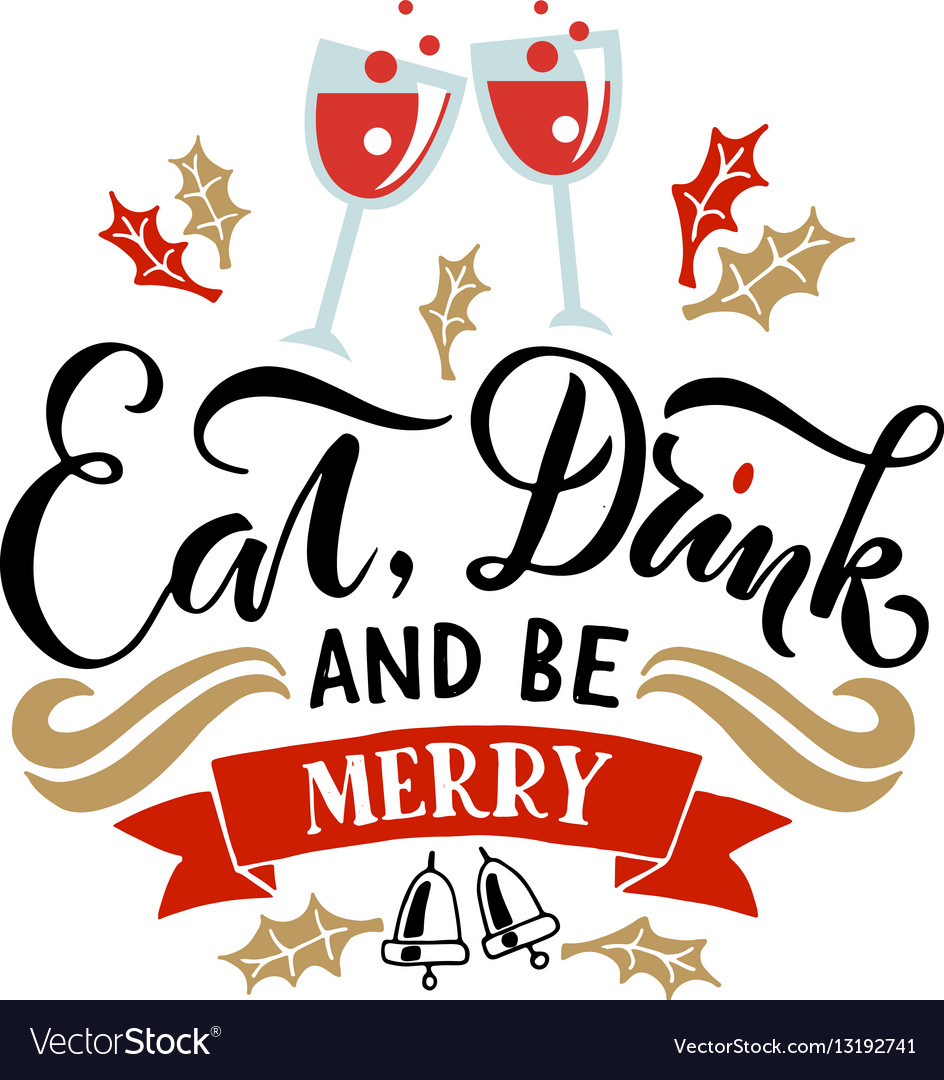
Honestly, it was as though I was trying to poison them. The Brits would have greedily accepted the gift of more free cake because, hey, it's Christmas and what else are you going to do at this time of the year apart from 'eat, drink and be merry'?

Apropos, eating, drinking and being merry... I always thought that that phrase came from Shakespeare, but a more religious colleague of mine pointed out that it came from the Bible.

Here is the full text from Ecclesiastes, Chapter 8, Verse 15, taken from the King James version of the Bible: 

Then I commended mirth, because a man hath no better thing under the sun, than to eat, and to drink, and to be merry: for that shall abide with him of his labour the days of his life, which God giveth him under the sun.

So, folks, if God is telling you to have fun, fun, fun and stuff your face, do it. At least at Christmas time. Don't hold back on the mince pies and Stollen. It's only once a year.



Monday, December 4, 2023

Another back-to-front word

And that word is...cauliflower.

Often, I go to the supermarket planning to buy something for lunch for the next two or three days, and then I see an array of creamy, plump cauliflowers and I simply can't resist. Mostly, I end up making cauliflower cheese.

The word 'cauliflower' consists of two parts. The first part means 'cabbage' and the second 'flower'. Originally, it was called 'cole florye' in English - from the Italian word 'cavoli fiore' - or 'flowered cabbages'. 

French also has the two components the same way round: chou-fleur = cabbage flower.

But what do the Germans call it? Blumenkohl - flower cabbage. I wonder why.

Wednesday, November 22, 2023

You're not good; you're well.

Since there is a big lull in work right now, I've been binge-watching some DIY series on the BBC archive. Right now, it is the turn of Money for Nothing, in which someone goes to a recycling centre and asks people chucking away their old stuff if they can take three things away with them (all carefully chosen, of course). The presenter works on one project and delegates the other two items to various people, such as a blacksmith, a signwriter, and other upcyclers.

The designs and amount of creativity evinced by everyone involved are impressive and on the whole, the programme provides plenty of inspiration.

However, there is one thing that really irks me, that really gets my goat and that is that most people, when asked how they are, reply "I'm really good." And why does that annoy me? Because they are not being asked about their morals but about their health.

If someone asks you how you are, there are various reply options. They range from "Very well, thank you" to "Mustn't grumble". The word "good", on the other hand, describes a person's moral status. "He is such a good, kind-hearted person he is almost a saint."

Other responses to "How are you?" are as follows....

"I'm fine, thanks."
"Fine, thanks."
"Fine."
"Great, thanks."
"Not bad."
"Okay."
"I've been better."
"Busy."
"A bit poorly."
"A bit under the weather." (Like the previous phrase, this one means 'not so well'.)
"Stressed out."
Or as I sometimes say, "I'm still breathing."

And, of course, to be polite, your response should incorporate an enquiry about the other person's health by adding "And you?" to the end of your response. Like this: 

"How are you?"
"Fine, thanks. And you?"
"Oh, I'm fine, too."

But "good" as an answer to how you are just pains me. I wince every time I hear it. It's just as bad as hearing someone ask for a drink (or whatever) by saying "Can I get...?" Aaargh.

Here is a "good" person:


And here is a well person:


Tuesday, November 14, 2023

Film recommendation: Wochenendrebellen

Seeing as I had nothing else lined up for my birthday, I took myself off for the 5 o'clock showing of a German film I'd seen a preview of: Wochenendrebellen.

Based on a true story, it is about an autistic 10-year-old who tries to fit in better at school because he's been threatened with being sent to a Förderschule or special school. He makes a deal with his father: he will do his best not to get enraged when his fellow pupils tease and bully him, so long as he can visit all 56 football teams in Germany to find his favourite team. After all, all the other children at school have a favourite team; if he has one, too, he'll fit in with the others. Right?

Being autistic, though, means he has a lot of rules: the football ground has to be environmentally friendly; the players shouldn't have colourful football boots, the mascot mustn't be stupid; there should be no Nazis. 

Now that doesn't sound that exciting does it? Well, it kept a whole row of small boys quiet and engrossed. They were maybe 8 years old (the film is approved for 6-year-olds and up) and very well behaved. 

The issue of autism is dealt in quite a sensitive way but the actors were fantastic. Two actors in particular deserve special mention: Florian David Fitz as the father Mirco (quite a famous actor in Germany( and the absolute marvel who played the son Jason. That role was acted by newcomer Cecilio Andresen and this was only his third film (and all filmed in 2023). He reminded me of Nicholas Hoult in About a Boy.

I've been reading interviews given by the real father and son as well as one with Jason and Cecilio and Jason says that the scenes are pretty much authentic - the actions, the tone of voice, everything. 

Basically, the film is a little gem and really should be more widely seen. Rush out over the weekend and watch it before it disappears from the cinema screen. The scenes at the various football grounds across Germany deserve to be viewed on a large screen. 

I'm so glad I made the effort to walk through the pouring rain to see it. And it's even made me want to go to at least one football match - just to feel what the atmosphere is like at first hand. The film really is an inspiration.

Here's an interview in German with Jason and Cecilio:


And here's the official trailer:


And here is a news report:


The actors on the left; the "real" characters on the right.


I feel bereft

 Yes, bereft [ beraubt ] is how I feel. A couple of weeks ago, I wondered why I hadn't had any articles on the subject of stationery [ S...